
HRV 101: What Heart Rate Variability Is, and What It Means for Your Work
Clinically reviewed by Dr Anne Marieke Doornweerd (Psychology and Neuroscience).
You wake up, check your ring / phone, watch, and there it is: HRV 38, down from your usual 55. You feel fine and the coffee is having its usual effect, so you close the app, walk into a 9am that needs your sharpest thinking, and spend the next hour wondering why the words are not landing.
HRV is probably the least understood number on your wearable, but it’s also one of the most useful. Sleep score is easy to read: high is good, low is bad (although see our recent post on why this simplistic read has pitfalls too). HRV is more like a warning light for your nervous system, and once you know what it is picking up, it becomes a real input into how you plan your day. It will not tell you to work harder. It tends to tell you the opposite, and it is usually right. Here we dive into what it is, how to read it and what your HRV score means for your day.
What is HRV, and what does it actually show?
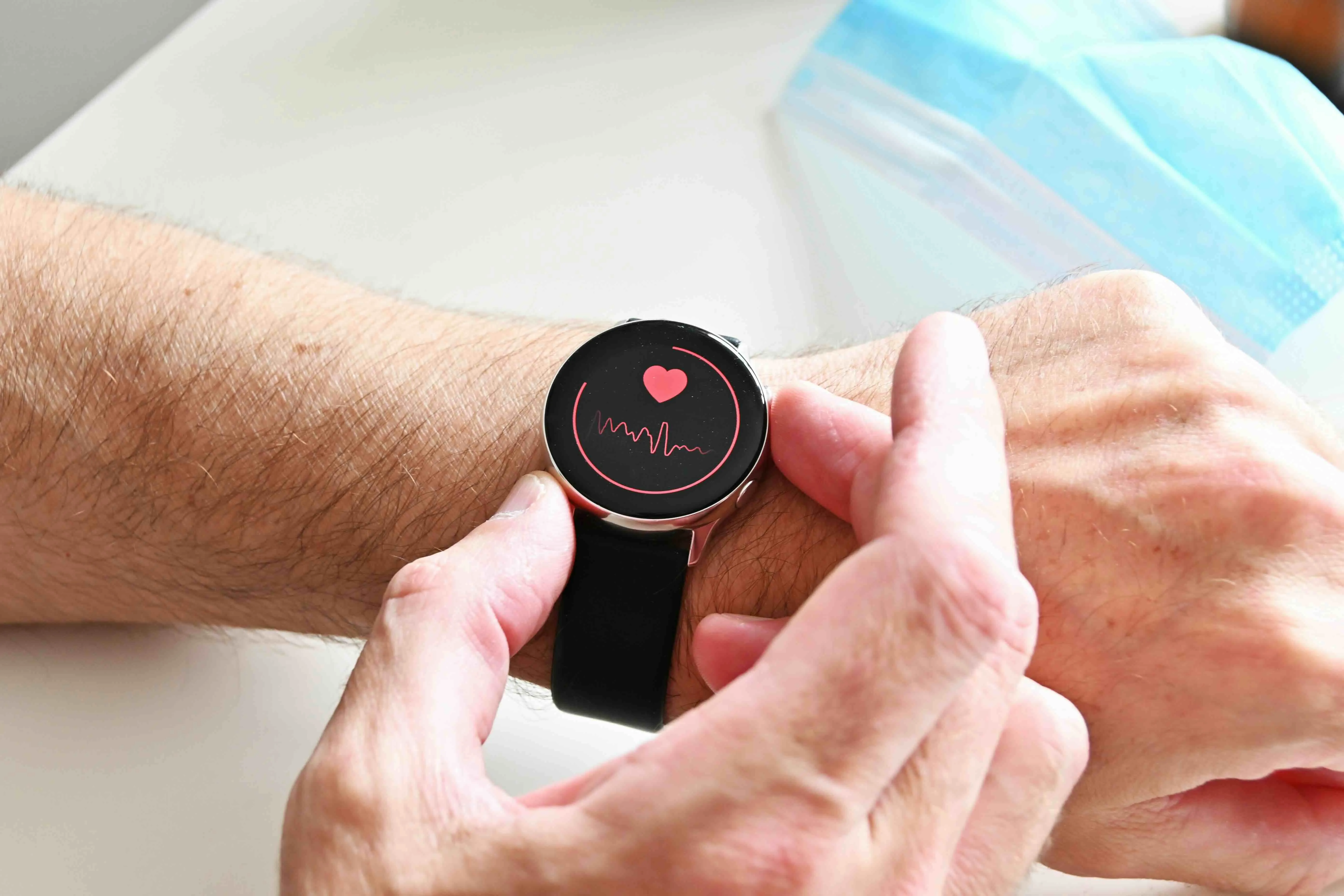
Your heart does not beat like a metronome. Even at a steady 60 beats a minute, the gap between one beat and the next keeps shifting by fractions of a second, and HRV is the measure of that variation. As Harvard Health puts it, the differences are so brief they are undetectable without a device. Your ring or watch is doing the work you cannot feel.
That variation is controlled by your autonomic nervous system, which runs in the background, managing processes like digestion, breathing and blood pressure that you never think about. It has two branches. The sympathetic branch is the accelerator, the alert-and-defend system that ramps you up for stress and deadlines. The parasympathetic branch is the brake, the rest-and-recover system that calms you down. HRV reflects the balance between the two.
Counterintuitively, more variation is the healthy sign. High HRV means your body can switch quickly between accelerator and brake, which is what a well-recovered, adaptable nervous system does. Low HRV means the accelerator is stuck on, and your system is carrying load without the chance to recover. So a higher number is the good news, which trips people up because generally people with lower resting heart rate tend to be the fitter ones.
HRV is not a measure of your discipline or effort. Improved fitness alone will not shift this number. It is a read on recovery, and it moves for all sorts of ordinary reasons, which we will get to.
Why your nervous system has a say in your work
HRV is not just a fitness metric; the system it tracks is wired directly into the part of your brain you rely on to do your job. The vagus nerve links your heart to your prefrontal cortex, the region running focus, planning, self-control and decision-making. Psychologist Julian Thayer called this the neurovisceral integration model: your heart and your thinking brain are reading off the same nervous system.
Which is why HRV and cognitive performance track together. A 2019 systematic review in Frontiers in Neuroscience found a consistent association between higher HRV and stronger executive function: better working memory, sharper attention, steadier self-regulation. When HRV drops, those capacities soften first, much as sleep debt quietly erodes them. You can still work on a lower-HRV day, but the kind of work you thrive on may be narrower, and pushing through may impact your subsequent days.
What HRV means for your workday
HRV works less like a to-do list and more like a forecast for what your brain is built for today.
• HRV high, at or above your baseline? Your system is recovered. This is the day for work that needs your full range: the strategy doc, the tricky negotiation, the deep problem you have been circling. Protect those hours and spend the good bandwidth well.
• HRV low for a single morning? This is not a crisis, just a heads-up. Front-load the structured work that does not need you at full stretch, and move the high-stakes thinking to a stronger day if you can. Push, do not punish.
• HRV trending down across several days? This is the signal worth taking seriously. A sustained dip points to accumulating stress or under-recovery, and it is a useful early flag for burnout before you feel it. This is the week, if you can, to reschedule the difficult one-to-one and the salary conversation, not power through them.
It is the same logic elite sport worked out years ago, and the same we cover in How to Use Your Wearable for Work. Data goes in, a decision comes out, and you stop pretending a low-readiness day is a green-light one.
How to improve your HRV
HRV responds to how you live, not to a single hack, so treat it as a baseline you raise over weeks rather than a number to spike before a big meeting. The levers that move it are the unglamorous ones.
• Sleep, first and always. Consistent, sufficient sleep is the strongest lever most people have. Your parasympathetic system does its recovery work overnight, which is why HRV and sleep quality rise and fall together.
• Aerobic exercise, at a sustainable dose. Regular moderate cardio builds the vagal tone behind higher HRV over time. A single hard session will drop your HRV the next morning while you recover, which is normal and not a step backwards.
• Slow, paced breathing. A few minutes a day at roughly six breaths a minute nudges your system toward the parasympathetic brake. It is one of the few things that shifts HRV in the moment as well as over time.
• Go easy on alcohol. Alcohol is one of the most reliable HRV suppressors going, and the dip often lingers a day or more after the drink. That is why your number craters after a good night out.
• Manage the cumulative load. Chronic stress and relentless intensity keep the accelerator pressed down. Protecting real downtime is not indulgent; it is the mechanism.
The caveats: how to read HRV without misreading it
This is the part most dashboards skip, and it matters more than any single reading. HRV is powerful because it is sensitive, which also makes it easy to over-interpret. A few rules keep you honest.
• Trust the resting number over a spot check. Wrist and finger sensors are good rather than perfect, and validation studies find they track closely with clinical ECG at rest but drift once you are moving. An overnight or on-waking average is far more reliable than a reading you force out of your device mid-morning, so read the number your tracker records when you are still, not one you chase at your desk.
• Never compare your number to anyone else. HRV varies enormously with age, sex, genetics and fitness, so a healthy figure for one person can be double another's. Harvard Health is blunt about this: there is no ideal value, so measure only against your own baseline.
• The trend is the signal; a single reading is noise. One low morning tells you almost nothing. A rolling average moving in one direction over a week or more is what means something.
• Measurement conditions change the number. Time of day, body position, whether you have eaten and how recently you have moved all shift HRV. An overnight or on-waking average is far more reliable than a spot check standing up after a coffee.
• Do not cross-compare devices. A chest strap, a wrist band and a finger ring use different sensors and algorithms. Pick one device and track that number over time rather than holding two against each other.
• A dip is not automatically a problem. Alcohol, a late meal, a hard workout, travel, illness, poor sleep and where you are in your menstrual cycle can all lower HRV. Progesterone rising in the luteal phase tends to pull it down, which is biology rather than a red flag, and part of why your hormones have such a say in your productivity.
• It is a wellbeing signal, not a diagnosis. Consumer HRV is useful for spotting your own patterns, not for medical assessment. A number that worries you is a reason to speak to a professional, not to self-diagnose.
How to use this with Phase
HRV is only as useful as the decision you make with it, and that is the gap Phase is built to close. Right now your ring gives you the number and leaves the interpreting to you.
Phase connects the wearables you already use, including Oura, Whoop, Apple Health, Garmin, Google Health and Flo, to the task and calendar tools you work in. It reads your recovery signals, ranks your tasks by bio fit rather than deadline alone, and aligns your calendar so your peak and low-readiness windows sit visibly against the meetings already in your week. A low-HRV stretch stops being a number you notice over coffee and starts protecting your hardest work for the days your nervous system can back it. You go from being your own analyst to being the operator again.
The takeaway
HRV is the tiny variation between your heartbeats, and one of the most honest reads on whether your nervous system is recovered or running on the accelerator. Learn your baseline, watch the trend rather than the single morning, and let a sustained dip reshape your week rather than dragging your best thinking into a day that cannot support it.
Join the waitlist and see what a workday built around your recovery, not just your deadlines, looks like.
The information in this post is for educational purposes only and does not constitute medical advice. Phase content on health, hormones and bio data is reviewed by our clinical advisory team. If you have concerns about your health or wellbeing, please consult a qualified healthcare professional.
