
Does Your Tracker Calm You Down or Wind You Up? The Science of Wearable Data Anxiety
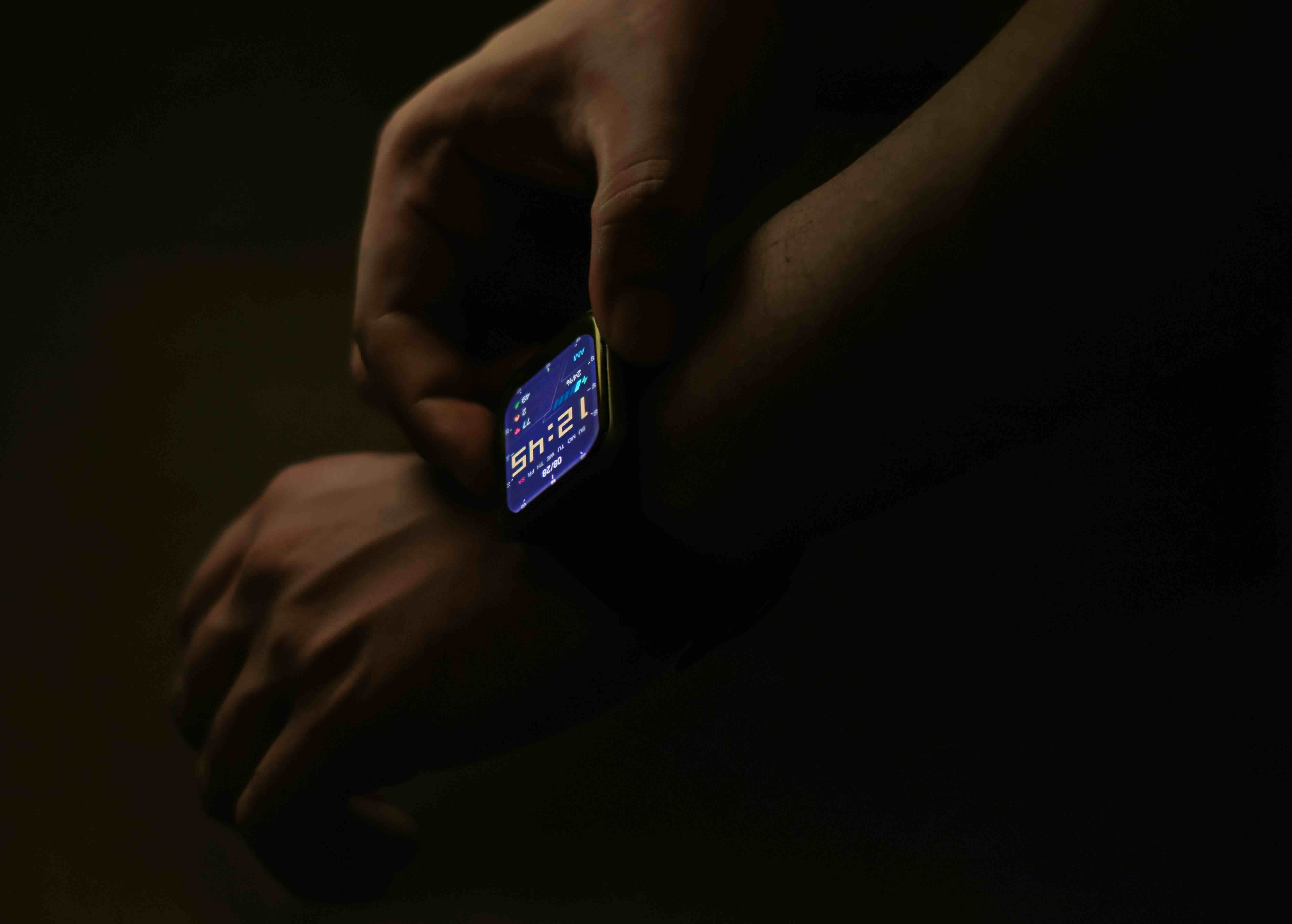
It is 4am. You are awake, and the first thing you reach for is not the light switch, it is your phone, to see what your ring or watch recorded while you slept. Readiness is low. Now you are properly awake, and already running the maths on how the day ahead is going to go.
If that scene feels familiar, you are in a large and fast-growing group. More than a third of British adults now wear some form of health tracker, and our devices have become remarkably good at noticing what we have not yet noticed ourselves. That is a real leap forward in technology and human understanding. It is also, for a lot of people, a new source of low-grade worry.
The same technology that can flag a pregnancy weeks before a test, can also have someone refreshing an app at 4am, or taking the ring off completely because the checking took over. Both of those things are true, and we wanted to explore this tension between information and overwhelm, and importantly, what can be done about it.
What your wearable can now see, and why it is remarkable
Many modern wearables track resting heart rate, heart rate variability (HRV), skin temperature and respiratory rate continuously, night after night. That volume of passive data lets them pick up physiological change with a sensitivity that would have sounded like science fiction ten years ago.
A 2024 study published in npj Digital Medicine analysed Oura Ring data across 97 full-term pregnancies. Nightly temperature, resting heart rate and HRV all shifted in characteristic ways after conception, with heart rate climbing within roughly two weeks. The changes appeared in the data before many people would have thought to take a test. The same study spotted distinct temperature patterns around early pregnancy loss, pointing to a future where wearables support earlier awareness of things that matter enormously.
This is the wearables doing their half of the job. The sensors have become extraordinary observers into the health of the user. And for anyone who has sat through the nervous wait to find out if they are pregnant, the idea that a ring could offer an early, gentle signal could be genuinely useful for many.
The other half: when the number becomes the stressor
However, there is a well-documented flip side. Sleep researchers even have a name for it: orthosomnia, a term coined by Baron and colleagues (2017) for people whose pursuit of perfect sleep data starts to worsen the very sleep they are tracking. Their paper described patients so fixed on their numbers that anxiety about the data disrupted their rest, a loop where the measurement changes the thing being measured.
You do not need a diagnosed sleep problem to recognise it. A poor sleep score that colours the whole morning. A dip in readiness that makes you second-guess a day you were feeling fine about. The pregnancy coverage that has been everywhere recently captured the same tension: alongside the wonder, women described refreshing the app at 4am, and one took her Oura ring off for three months because the checking had taken over.
None of this means the data is wrong. The sleep score was directional and the readiness dip was real. The difficulty lives in the gap between seeing a number and knowing what to do with it.
Why uncertainty stings: the Dickerson and Kemeny finding
Here the psychology gets specific. In a landmark meta-analysis of 208 laboratory studies, Dickerson and Kemeny (2004) showed that our stress response, measured through the hormone cortisol, does not spike at just any challenge. It spikes hardest when a situation is both uncertain and outside our control. Uncontrollable, open-ended threat is the combination that keeps the stress system switched on.
That maps almost perfectly onto a lone number on a screen. A readiness score of 61 with no context and no next step is an uncertain, uncontrollable threat. Your brain has a signal that something might be off, and nothing to do about it. It's no surprise that the cortisol response follows.
The encouraging part is what the same science implies in reverse. Give that number context and a concrete next step, and you hand back the two things the stress response is most missing: understanding and agency. The identical 61 that unsettled you at 4am can steady you by 9am, once it arrives with meaning and a plan.
So should you just take the device off?
For some people, at some moments, stepping back is the right call, and that is completely valid. But fewer sensors is a strange answer to a problem the sensors did not create. The wearables have already done the hard part. What is missing is the second half of the job: interpretation. Turning what the sensor sees into what it means, and what to do next.
In health, that interpretation has to be clinical, and it should stay that way. Early pregnancy signals and worrying heart rate changes belong with qualified professionals, not an app's guesswork. But a large share of the data we generate every day is not really a health question at all. It is a question of everyday utility: given how I slept and how recovered I am, what should I actually do with today?
How to use this with Phase
That everyday translation is exactly what Phase is built for. Phase takes the sleep, HRV, recovery and cycle data you are already generating and turns it into decisions about when to do what.
Instead of a readiness score that sits there and worries you, Phase reads it against your actual task list and calendar. Low readiness becomes a clear instruction: this is a consolidation day, so methodical work moves up and the big brainstorm shifts to Thursday, when your data says you will have the bandwidth. A strong recovery window becomes a prompt to protect your peak hours for the work that deserves them.
Phase connects to 74 wearables and apps through Terra, including Oura, Whoop, Apple Health and Garmin, so it works with the device already on your wrist or finger. The number stops being a verdict on your morning and becomes the start of a better plan for your day. That is the whole difference between data that winds you up and data that calms you down. One leaves you holding a number. The other hands you a next step.
Food for thought
Does your tracker calm you down or wind you up? The honest answer is that it depends almost entirely on whether the number comes with meaning and a move to make. The sensors have done their half brilliantly. The interpretation layer is the half still being built, and for your working day, that is precisely what Phase does.
Phase is on its waitlist now. If you want your bio data to steady your decisions rather than crowd your 4am, join the waitlist and be ready for your next high-readiness window.
