
The science behind Phase:
how sleep, HRV and hormones shape your working brain
Phase is built on peer-reviewed research, clinical expertise and strict data protection.





- 75+ years of combined research experience
- 100+ published papers across sleep science, neuroendocrinology, women's health, psychology and neuroscience
- designed the model that interprets your sleep, HRV and hormonal cycle and decodes what those shifts mean for your cognition.
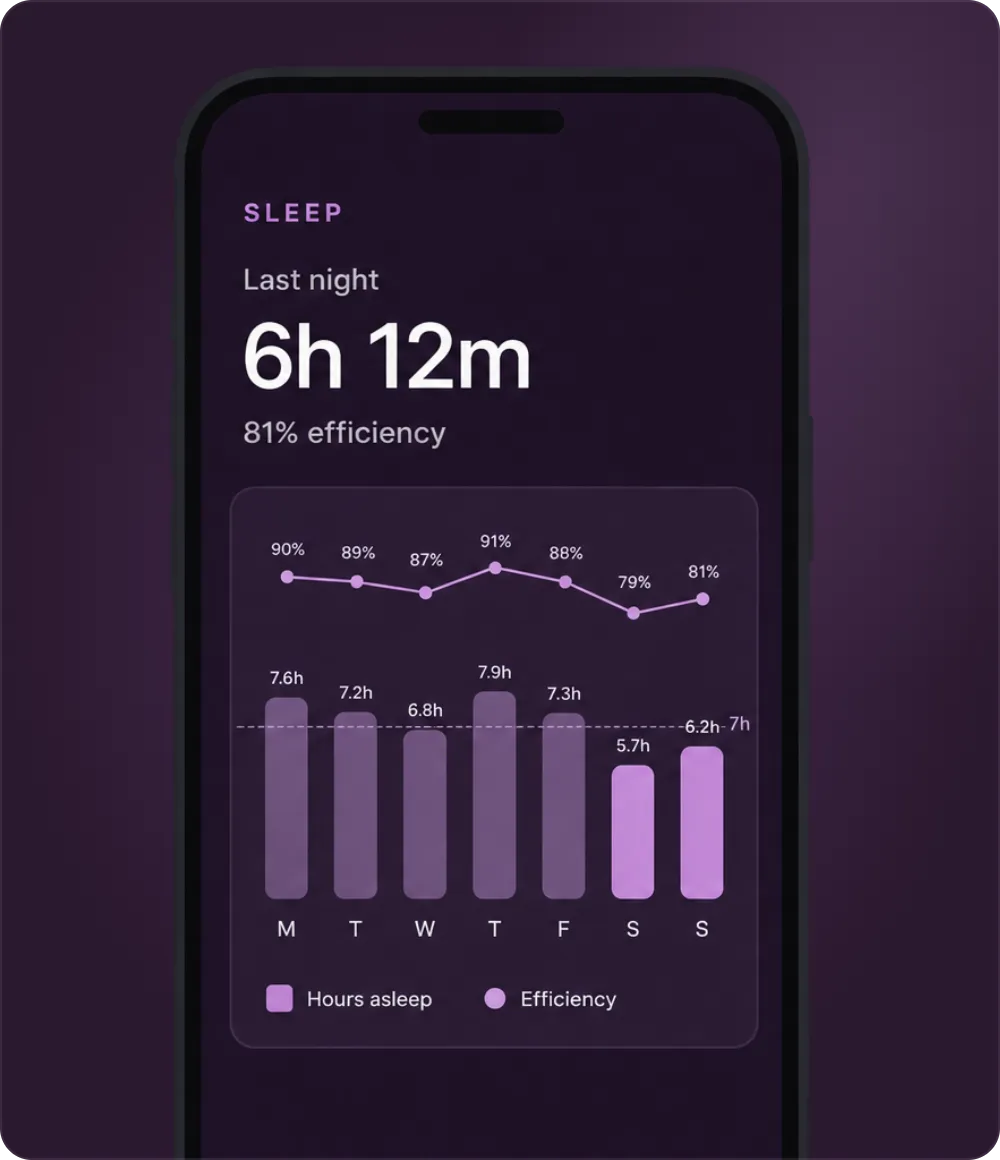
Sleep: how duration, efficiency and sleep debt affect your brain
Sleep is the foundation of how well you think. Even a few short or broken nights impact focus, planning, and emotional control; unhelpfully, your brain will tell you that you are ok when you aren’t. Phase looks beneath your headline sleep data to understand how rested you really are, and what that means for optimising your work today.
The impact of poor sleep on cognition is one of the most reproducible findings in sleep science. In one study, people limited to six hours a night for two weeks showed cognitive impairment comparable to a full night without sleep, yet rated themselves only mildly sleepy (Van Dongen et al., 2003). Executive function goes first: including working memory, planning, and the ability to hold several moving parts in mind at once (Krause et al., 2017). Sleep loss also amplifies activity in the amygdala and weakens its link to the prefrontal cortex, which makes emotions harder to regulate (Yoo et al., 2007).
Every device weighs its sleep score differently, so we deliberately look past those composite scores to the signals underneath them. That gives you a truer, more consistent read on your potential waking function and recovery, whichever wearable you use.

Reviewed by Dr Victoria Revell, Associate Professor, Sleep and Circadian Physiology
Heart rate variability (HRV): what your nervous system says about your focus
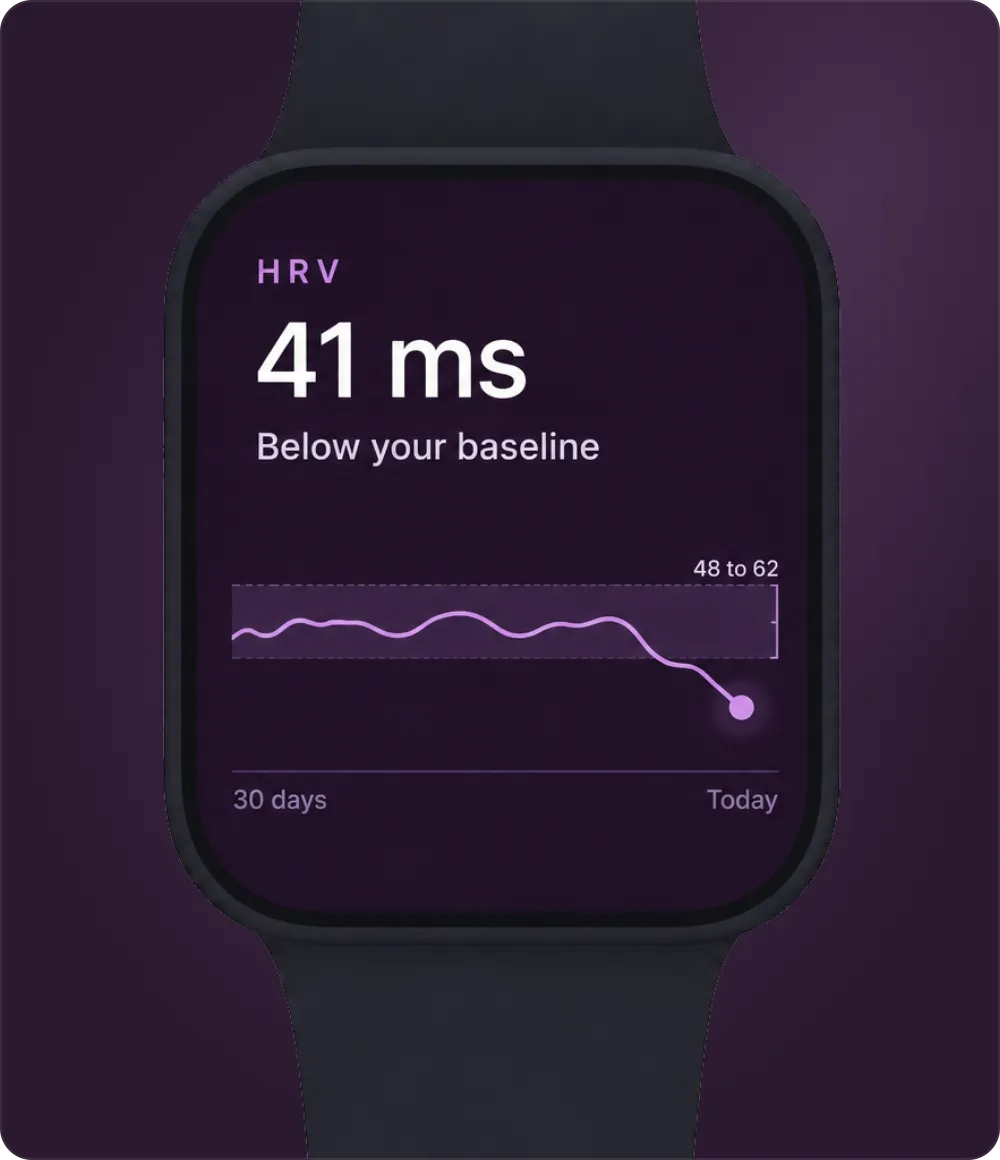
Heart rate variability is the tiny variation in time between one heartbeat and the next, set by the balance between your nervous system's accelerator (sympathetic) and brake (parasympathetic).
When HRV sits at or above your usual range, your system is switching easily between stress and recovery. A sustained drop suggests it is carrying load without the chance to recover, whether that load is a deadline, a virus or three late nights.
HRV and your thinking brain run on the same wiring. The vagus nerve links heart rhythm to the prefrontal cortex, and the neurovisceral integration model explains why higher HRV is consistently associated with stronger executive function: better working memory, sharper attention and steadier self-regulation (Thayer et al., 2009; Forte et al., 2019).
HRV varies enormously with age, sex, genetics and fitness, so a healthy figure for one person can be double another's. Phase only ever compares you with your own baseline, looking at the trends. Higher-HRV days suit complex, strategic work, and lower days suit structured tasks with clear edges.

Reviewed by Dr Anne Marieke Doornweerd, psychology and neuroscience
Hormonal cycles: how estrogen and progesterone shift the way you think
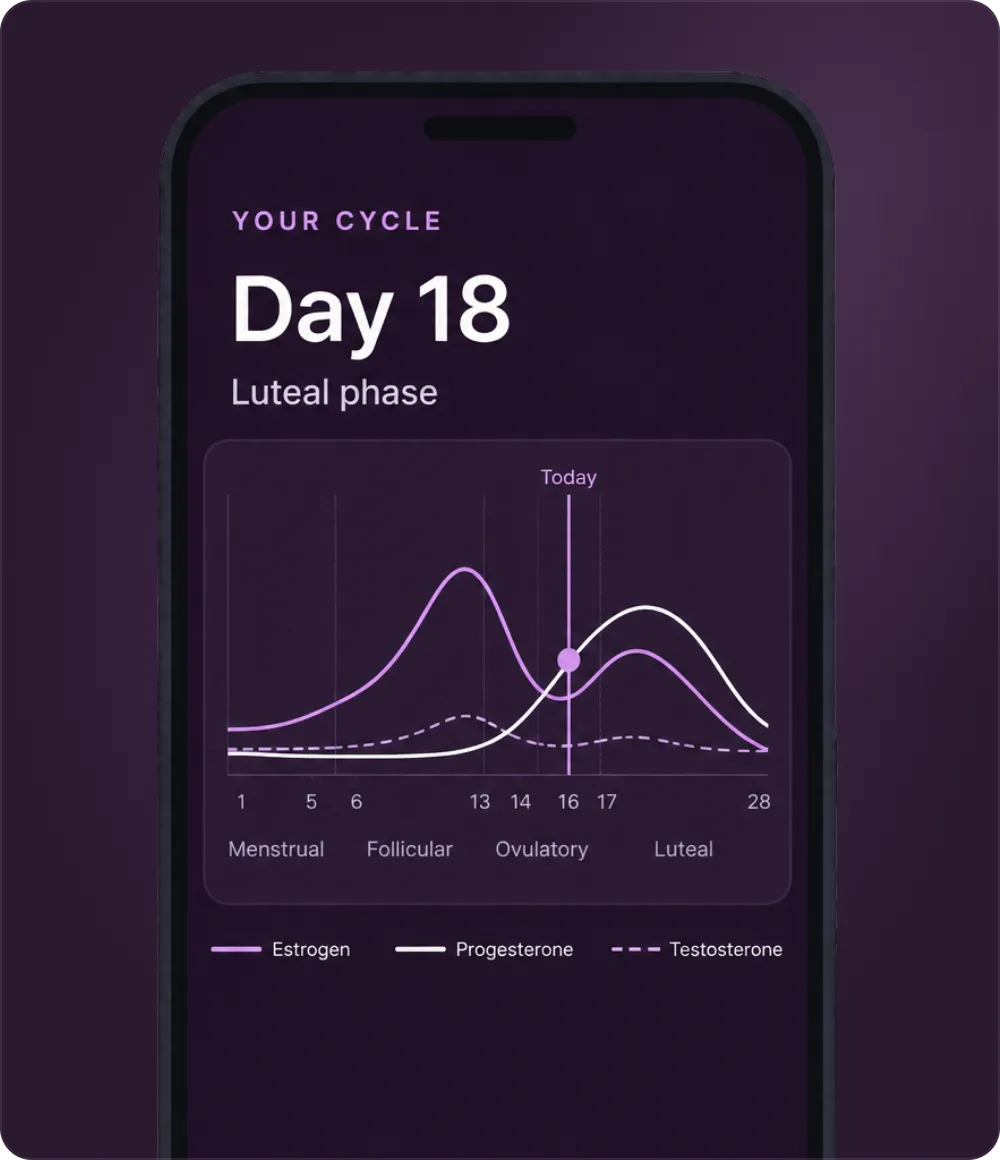
Across a menstrual cycle, estrogen, progesterone and testosterone rise and fall in a broadly predictable rhythm, and all three act directly on the brain. Estrogen supports serotonin and dopamine signalling and protects the hippocampus, the region that stores memories. Progesterone increases GABA activity, which has a calming effect, and strengthens the fronto-striatal circuits behind goal-directed, methodical work (Pletzer et al., 2019).
Those shifts play out across the cycle. With both hormones at their lowest in the menstrual phase, brain scans show parietal changes linked to perspective-taking and recall of past events, a strong base for reflection (Meeker et al., 2020). As estrogen rises through the follicular phase, motivation returns and new information sticks more easily, peaking around ovulation when emotion recognition and verbal fluency are at their strongest (Jang et al., 2024). In the luteal phase progesterone leads, narrowing attention towards detail and methodical execution while metabolic rate rises by around 10%, so energy often dips later on (Solomon et al., 1982; Écochard et al., 2022).
No two cycles are identical, and sleep and stress can turn the volume up or down on any phase. That is why Phase reads your cycle alongside your sleep and HRV rather than on its own. Don't track a cycle? Phase works from sleep and HRV alone.

Reviewed by Dr Jess Chadwick, PhD, neuroendocrinology, Imperial College London
Phase translates your biodata and lines up your tasks so you do the right work at the right time, for you.
From biology to your working day: the six cognitive strengths
Your sleep, HRV and hormones don't tell you much on their own. Phase translates them into six elements of cognition, each of which shifts from day to day, so you can see which kinds of work your brain is set up for right now.
Energy
Motivation
Focus
Reflection
Communication
Creativity
Your alignment score
Every task and meeting draws on a different mix of these elements. A board presentation leans on communication and energy, a quarterly plan on reflection, a code review on focus. Phase scores what each piece of work needs against how your six elements look that day, and gives you an alignment score so the best-matched work rises to the top.
You're always ready for work. Phase shows you which work you're most ready for right now.
Join the waitlist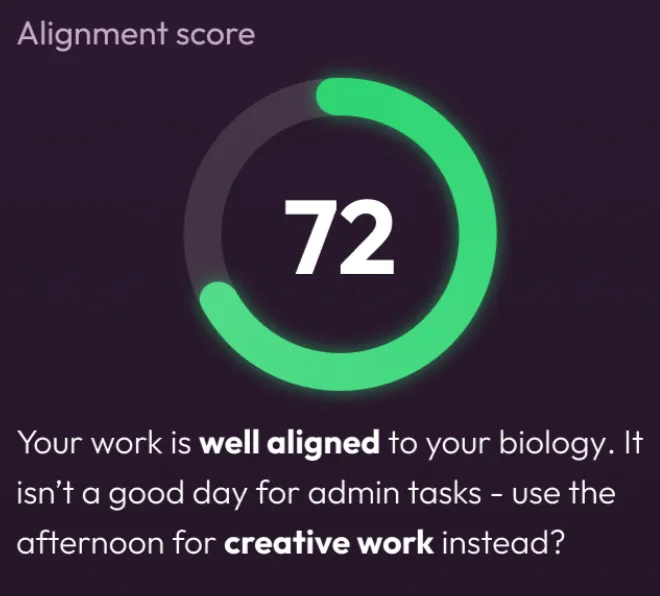
Further research and publications
Go deeper into the evidence behind each signal, or read the papers our model is built on, including work published by our own team.

Meet our clinical advisors


Join the Waitlist & be the first to trial Phase
