
Eat the Frog Is Wrong for Half Your Mornings
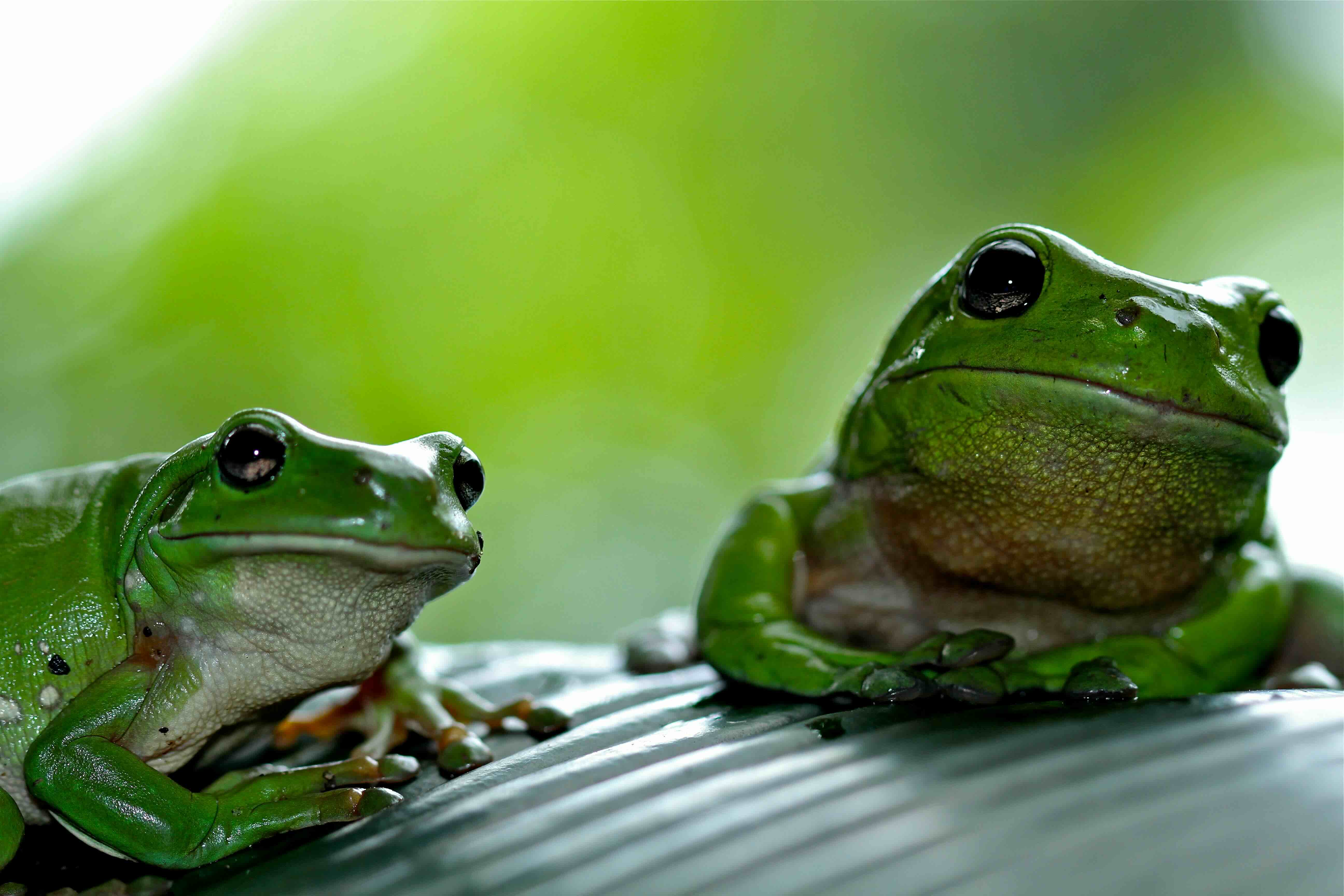
Do the hardest thing on your list first thing, before the day gets its hands on you. That is eat the frog, the oldest opening move in productivity advice, and it rests on an assumption nobody could test when it was written: that the morning brain ist he best brain you are going to get that day.
Often it is. After six hours sleep, with low sleep efficiency, it is not; the part of your brain that hard work leans on hardest is the part a short night affects first.Your wearable has been recording that difference all night, so the assumption is now something you can check rather than inherit.
Here is what Brian Tracy prescribed, what sleep research says about the mornings it will not work, and a short test for whether today is a frog day and which frog to pick.
What eating the frog actually means
Whilst the phrase “eat the frog” may trace back to the French writerNicolas Chamfort in the 1790s, who suggested swallowing a live frog each morning so nothing more disgusting could happen for the rest of the day. BrianTracy turned the image into a method in his 2001 book Eat That Frog!, and productivity culture has opened with it ever since.
Tracy's version is more specific than the shorthand suggests. Your frog is your biggest and most important task, defined as the one you are most likely to put off, and the instruction is to start on it first thing each morning before you touch anything else. If you have two frogs, he says to eat the uglier one first. You then stay on it until it is finished rather than dipping in and out, which is the half of the method most people drop.
The reasoning holds up well. Willpower fades across the day, interruptions multiply, and the task you are avoiding gets heavier the longer it sits, so give it the freshest brain you have. What Tracy could not do in 2001, and Chamfort certainly could not do in the 1790s, is check whether the morning brain was the freshest one on any given day. You can, because your wearable recorded it all night.
A short night changes the specific part of the brain that the frog needs
Frog-sized work requires the use of the prefrontal cortex, and the prefrontal cortex is what sleep loss affects first. Harvard'sDivision of Sleep Medicine describes it as "particularly vulnerable to sleep deprivation", and it is the region handling logical reasoning and complex thought: planning, weighing trade-offs, holding several moving parts in your head while you compare them.
The same research makes a second point that matters more for planning your morning.Sleep-deprived people are unreliable judges of how impaired they are, the way adrunk driver is sure they are fine to drive. So, on the mornings when skipping the frog is the right call, your own read on the situation is the least trustworthy input available. Some external measure must do that job, and you already have one.
Look at duration and efficiency, not the headline score
A word on which number to trust. Most wearables hand you one sleep score out of 100, and thats core is a blend the company builds from several inputs using its own weighting. It works as a rough trend, but the weightings differ enough between devices that two wearables can track the same night and disagree by fifteen points.
Two of the numbers underneath it are more solid, and both sit a tap away in your app. The first is sleep duration: how long you were asleep, rather than how long you were in bed with the light off. The second is sleep efficiency, the share of your time in bed spent asleep, where above roughly 85% is normal and a run of nights below that means fragmented sleep even when the hours look fine.
Together they give you a usable morning signal. If your night was under about seven hours of actual sleep, or showed an efficiency well below your own normal, then complex reasoning will cost you more than it usually does. Sleep is not the only thing moving, since your cycle shifts your cognitive profile across the month too, but duration and efficiency are the two you can read in five seconds before you make any decisions you will regret.
Why half your mornings
Half is a round number and a deliberate provocation, of course how good your mornings are will be personal. If you count the short nights, the fragmented ones, the mornings in the back half of your cycle, the week after long-haul travel, and the ones that began at four with a small child in the room. For most people doing knowledge work, the mornings when the prefrontal cortex is at full power are closer to a coin flip than a given, which is one reason output fluctuates for reasons that have nothing to do with discipline.
The frog you should eat when you are tired
There is a useful twist here, because not every hard task needs a sharp prefrontal cortex.Psychologists Mareike Wieth and Rose Zacks tested people on two kinds of problem at their best and worst times of day. On analytic problems, the step-by-step kind with a right answer, people did slightly better at their peak, which is what you would expect. On insight problems, the kind that need a fresh angle, they did markedly better at their non-optimal time, because lower alertness meant less filtering and the unlikely connection got through.
Which turns atired morning into a scheduling question rather than a write-off. If your frogis the naming problem, the positioning rethink, or the awkward question aboutwhat you are actually building, a low-sleep morning is a reasonable time to sit with it. If it is the pricing model or the contract review, it wants the peak,and giving it less is how you end up doing it twice.
The frog test: three questions before you start
1. How did you actually sleep? Seven hours or more with efficiency in your normal range: the classic rule applies, and it applies without negotiation. Frog first. Under that, or a third short night in a row, and the frog waits unless it passes question two.
2. What kind of frog is it? Analytic frogs need the peak, so protect them. Insight frogs, the ones with no right answer yet, can goon a low-sleep morning and sometimes go better there.
3. When is your next good morning? Put the frog in it before you close the laptop, then spend today on work that suits a tired brain: tasks with clear steps, the tidying, the things you could do half asleep because you effectively are. A frog moved to a named slot is being scheduled. A frog moved to "later" is being avoided, and it will be heavier on Thursday.
How to use this with Phase
Phase runs that test before you have finished your coffee. It reads your sleep duration, efficiency, HRV and recovery from Oura, Whoop, Garmin, Apple Health and around 70 other sources, then ranks your task list by bio fit rather than by deadline. After agood night the demanding analytic work rises to the top, because that is when you can do it justice. After six hours and a broken second half, it drops below the methodical work and your open-ended tasks move up.
The calendar view handles the rest. It shows where your next strong morning falls, so the frog gets a slot rather than a guilt trip, and pushes lower-stakes work into the hours where your data says you dip anyway. Tasks come in from Notion, Todoist, Linear, Asana, Trello or Google Tasks. If any of this is new, startwith how to use your wearable for work, and if the numbers make you more anxious rather than less, we wrote about that too.
The hardest work still deserves your best brain
Tracy was right about the thing that matters. Your most important work should get your most capable brain, and most people give it whatever is left at four in the afternoon. The correction sleep research adds is that your most capable brain does not clock in at the same hour every day, and you can now check rather than guess. Join the waitlist and let your data pick the morning.
